



52% Off Karthus Rechargeable Hearing Aids for Seniors
Promo Code:
Click to copy the discount code and use it at checkout
As an affiliate, we may earn from qualifying purchases.
Information
- Platform: Amazon
- Country: US
Description
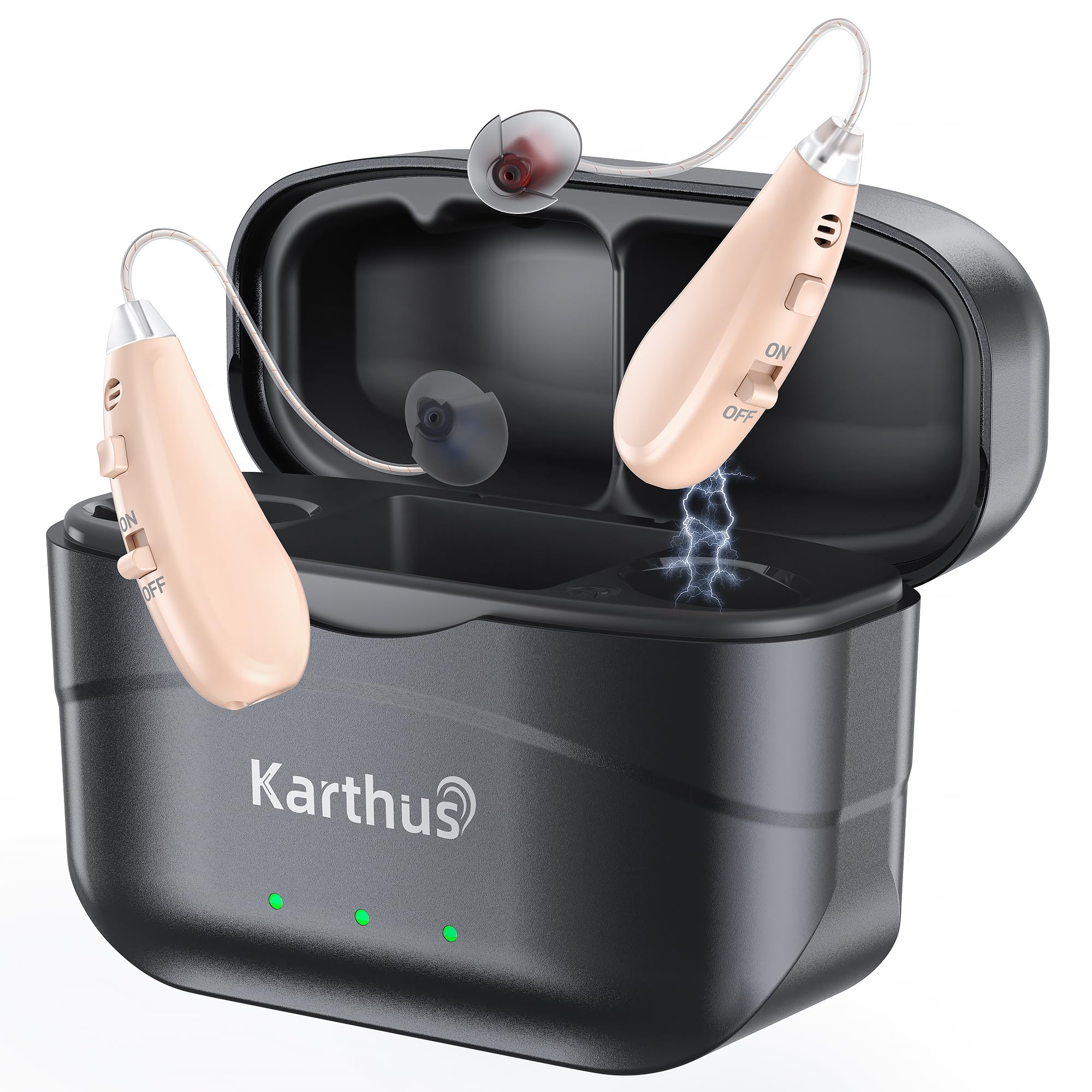
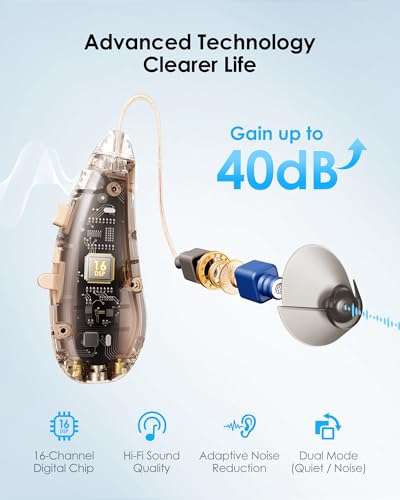
Karthus rechargeable hearing aids are designed for seniors with mild to moderate hearing loss, using advanced 16-channel digital processing to make conversations clearer in daily life.
No complicated setup needed — just turn them on and adjust volume with a single button, perfect for seniors who want easy, stress-free hearing support.
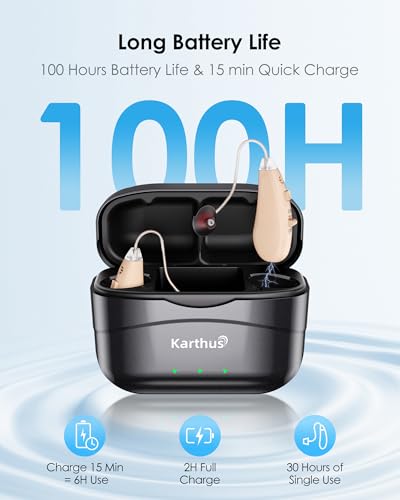
With up to 30 hours of use per charge and 100 hours with the charging case, plus a quick 15-minute charge for extra hours, you can rely on them all day long.
The behind-ear design with soft tulip tips stays comfortable even with glasses, and two hearing modes let you switch between quiet home chats and noisy restaurants.
Buy Suggestion
Skip these unless simplicity is your only priority. The 16-channel processing and two-mode design provide basic functional separation for controlled environments, but the lack of Bluetooth, app support, or telecoil means no streaming or direct phone pairing—a major compromise at $210. These suit seniors who want a no-frills, step-up-from-amplifier device and will never need to connect to a TV or smartphone.
[Spec analysis]
The 16-channel digital processor is a meaningful spec for mild-to-moderate loss, as more channels can improve speech-to-noise separation in theory. However, without independent noise-reduction ratings or real-world test data, it’s impossible to verify whether the “Quiet Mode” and “Noise Mode” actually outperform basic amplification. The 30-hour battery life and quick-charge support are competitive for rechargeable aids, but the 15-minute quick charge only yields “hours” (not a full day), which is weaker than some rivals that deliver 8+ hours from a 30-minute charge. The behind-ear design with tulip tips is standard; no venting or feedback cancellation details are provided, raising questions about occlusion and whistle in louder environments.
[Honest drawback]
The most limiting spec gap is the absence of a telecoil or Bluetooth—users cannot stream TV audio, take phone calls directly, or use loop systems in theaters or places of worship. This makes them a poor choice for anyone who wants to integrate hearing support with modern home electronics.
[Price take]
At $210 (52% off $440), the price is typical for basic rechargable hearing amplifiers; you can find comparable 16-channel models for $150–$250, so the discount is inflated—$210 is the real market rate, not a bargain.
Related Products